Expense Tracking for Couples: A Complete System That Doesn't Cause Fights
The honest guide to tracking expenses as a couple — including which system works for your money personalities, how to handle joint vs. separate accounts, and tools that remove the friction.

Marta Kovač
Behavioral Finance Coach & Personal Finance Educator
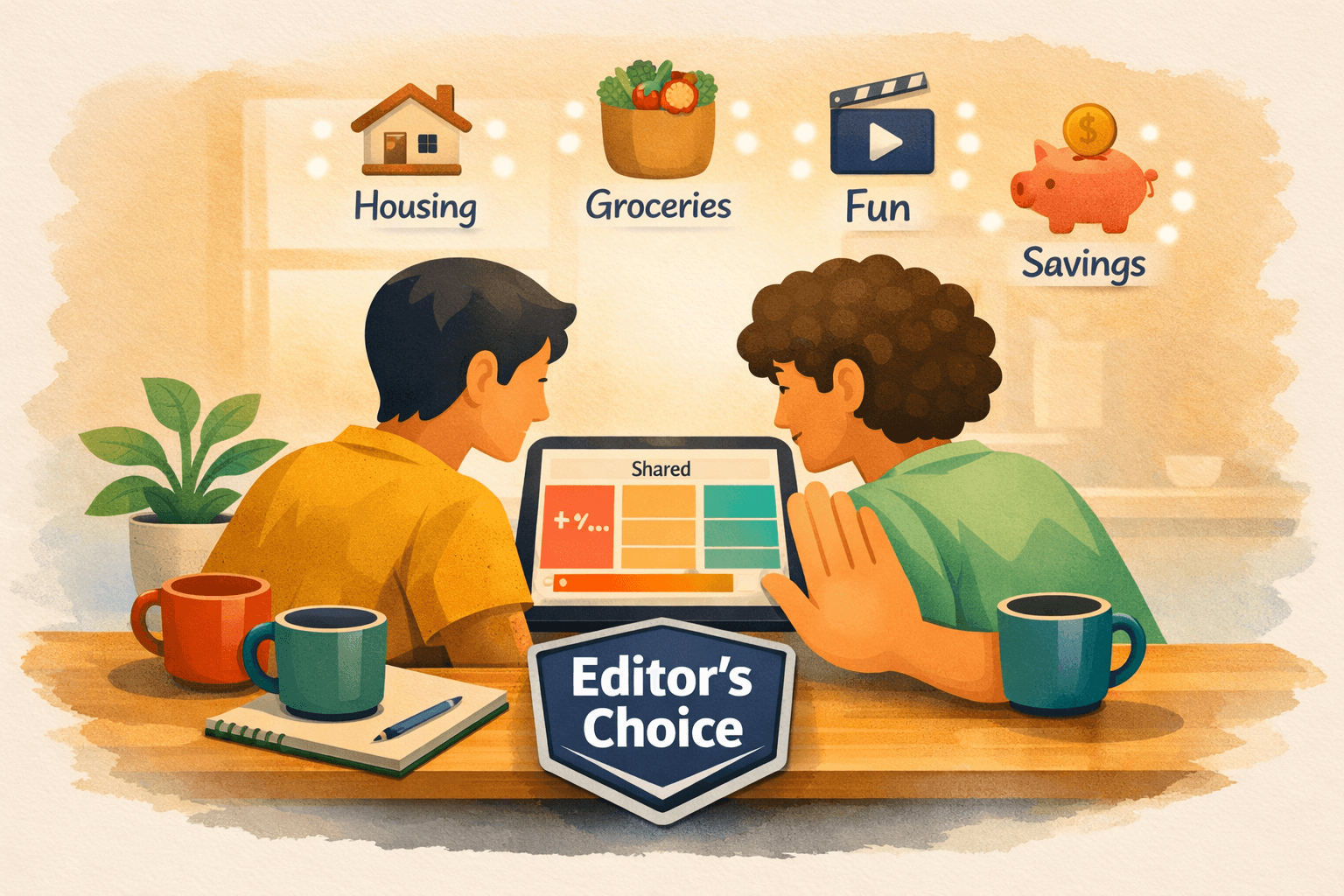
Expense Tracking for Couples: A Complete System That Doesn't Cause Fights
Money is the #1 cause of relationship conflict. But it doesn't have to be. The problem usually isn't how much money you have — it's the lack of a shared system that respects both people's money personalities.
This guide gives you that system.
Why Most Couples Fail at Shared Expense Tracking
The typical pattern looks like this:
- Couple decides to "be better with money"
- One partner becomes the de facto money manager
- Other partner feels monitored, controlled, or excluded
- The "money talks" happen only when something goes wrong
- Both parties avoid the topic because it leads to conflict
This isn't a communication failure — it's a systems failure. The right system removes the conflict because there's nothing to argue about. The rules are agreed on in advance, and the data is neutral.
callout.insight
Research published in the Journal of Family and Economic Issues found that couples who maintained both joint and separate accounts reported the highest financial satisfaction — 73% vs. 54% for fully joint or fully separate systems. The key: structure with built-in autonomy.
The 3 Expense Tracking Systems for Couples
System 1: The Fully Merged System
How it works: All income goes to one joint account. All expenses paid from that account. Complete financial transparency.
Best for: Couples who have been together 5+ years, similar income levels, aligned spending values, one person primarily manages finances.
The risk: If money personalities differ significantly, the partner who spends more conservatively can feel like a budget enforcer, and the freer spender can feel monitored or judged.
How to make it work: Set monthly "personal spending" allocations for each partner — an amount they can spend on anything without explanation.
System 2: The Proportional Split System
How it works: Shared expenses (rent, utilities, groceries, joint savings) are split proportionally based on income. Each partner manages their own personal spending from their own account.
Best for: Couples with different income levels, different financial backgrounds, or strong preferences for personal financial autonomy.
The risk: Can create an "accounting" mentality where every dinner has to be split exactly. Also creates awkwardness when income changes significantly.
How to make it work: Agree on a fixed monthly contribution from each partner to a shared "household expenses" account. Everything beyond that is personal.
System 3: The Income-Pool + Personal Allowance System
How it works: All income is pooled. Fixed shared expenses paid first. Each partner receives an equal "personal allowance" — no questions asked. Remaining goes to savings/goals.
Best for: Couples with very different spending habits who want to respect autonomy while staying aligned on overall financial goals.
The risk: Requires more accounting than System 2. Can feel complex initially.
How to make it work: Use an expense tracker that automatically separates joint from personal expenses. Yomio's account linking makes this straightforward.
Discover Your Money Personalities
Before you agree on a system, you need to understand where you each stand. Take this quiz — independently, before comparing answers:
Couples Quiz
Couple Money Personality Compatibility Quiz
Discover both your money personality types and get personalized expense-tracking strategies for couples.
Each partner takes the quiz independently — don't share your answers first!
The Essential Couples Expense Tracking Rules
Whatever system you choose, these 5 rules prevent 90% of money conflicts:
Rule 1: The No-Judgment Zone
Both partners need a personal spending allowance — an amount each month that requires no explanation or approval. This is the most important rule. Without it, every purchase becomes a potential argument.
Even $50/month per person creates the psychological safety that makes the whole system sustainable.
Rule 2: The Big Purchase Threshold
Agree on a dollar amount above which you check in before spending. This number should be high enough to feel comfortable but low enough to prevent "surprise" expenses. Most couples set this between $100 and $500 depending on income.
This isn't about permission — it's about keeping each other informed on decisions that affect shared finances.
Rule 3: The Monthly Review, Not Monthly Reckoning
Schedule a 30-minute "money date" once a month. Use this time to:
- Review shared account spending vs. plan
- Adjust budgets for the next month
- Celebrate savings wins
- Discuss any upcoming large expenses
The key: this is a planning meeting, not a judgment session. Keep it calm, use data, and agree on changes together.
Tip
Many couples do their money review over dinner or with a bottle of wine. The ritual matters as much as the agenda. If money meetings feel like dread, you won't do them consistently.
Rule 4: The Equal Information Rule
Both partners should have the same visibility into shared finances. Even if one person does more of the day-to-day management, the other should have full access to the same dashboard.
This prevents the "I had no idea we spent that much" conversations and removes the power asymmetry that comes from one partner controlling financial information.
Rule 5: Separate the Person from the Behavior
"You spent $400 on Amazon" creates defensiveness. "Our Amazon spending was $400 this month — do we want to set a limit?" invites problem-solving.
The shift from "you" to "our" isn't just semantics — it's the difference between accusation and teamwork.
How to Set Up a Couples Expense Tracking System Step by Step
Week 1: Calculate your actuals
Both partners pull their last 3 months of spending from their respective accounts. Calculate monthly averages for each category. No judgment — just data.
Week 2: Identify shared vs. personal expenses
Decide which expenses are "ours" (housing, utilities, groceries, joint savings goals) and which are personal (personal entertainment, clothing, personal hobbies).
Week 3: Agree on system and contributions
Based on your money personalities (see quiz above) and income, choose which system works best. Set the monthly contribution numbers.
Week 4: Set up your tracking tool
Connect your accounts. Set budget categories. Configure alerts. Agree on who gets which alerts (both partners? only the primary account holder?).
Month 2+: Review and refine
Use your monthly money date to refine allocations based on actual behavior. It takes 2-3 months for any new financial system to stabilize.
The Best Expense Tracking Apps for Couples
Yomio: Best for couples who want complete automation. Automatic receipt capture, real-time shared dashboards, split expense tracking, and per-category alerts. Available in 22 languages — ideal for international couples.
Monarch Money: Best for couples who want deep collaborative planning and investment tracking alongside expenses.
Honeydue: Purpose-built for couples managing shared and separate finances simultaneously. Free but limited features.
Splitwise: Best if your main challenge is tracking who owes what, rather than comprehensive budget management.
callout.insight
The best couples finance app is the one both partners will actually use. Yomio's automatic categorization removes the biggest friction point — manual transaction entry — making it easier for less engaged partners to stay involved.
Common Couple Money Conflicts and How Tracking Solves Them
Conflict: "You spend too much on X"
Solution: Tracking shows the actual number without emotion. "Our dining spending averaged $480 last quarter" is neutral data. Set a shared budget and let the app alert both of you at 75%.
Conflict: "I don't know where the money goes"
Solution: A shared dashboard with automatic categorization answers this question at any time. No one needs to ask — the information is always available.
Conflict: "You never check on the finances"
Solution: Both partners receive the same alerts with the same timing. Visibility is forced, not optional.
Conflict: "I feel like I can't spend anything"
Solution: Personal spending allowance removes the need for approval. Each partner has guilt-free money built into the system.
FAQs
Q: Should couples have a joint account for expense tracking?
Not necessarily. Many couples successfully track shared expenses using one partner's account while maintaining separate personal accounts. The system matters more than the account structure.
Q: What if one partner doesn't want to participate in expense tracking?
Start small — ask them to connect just one account (like the joint credit card) and receive just one monthly summary. Participation often grows once the partner sees how non-intrusive good tracking actually is.
Q: How do we handle income disparities fairly?
Use the proportional contribution system where each partner contributes a percentage of their income to shared expenses rather than a fixed amount. This ensures equal sacrifice, not equal dollars.
Q: Can we track expenses separately but still see a combined picture?
Yes. Apps like Yomio let you link multiple accounts (personal and joint) and create a combined household dashboard while keeping individual categories separate.
Q: What happens when one partner overspends their personal allowance?
That's between them and their personal account. The personal allowance is inviolate — the whole point is that it requires no explanation. If they overspend, they figure it out themselves.