What Is Doom Spending? A Practical Way to Pause and Review
Learn a simple way to notice emotionally driven purchases, check their effect on your finances, and choose a next step without relying on unsupported statistics.

Yulia Lit
Consumer Psychology & Behavioral Economics Researcher
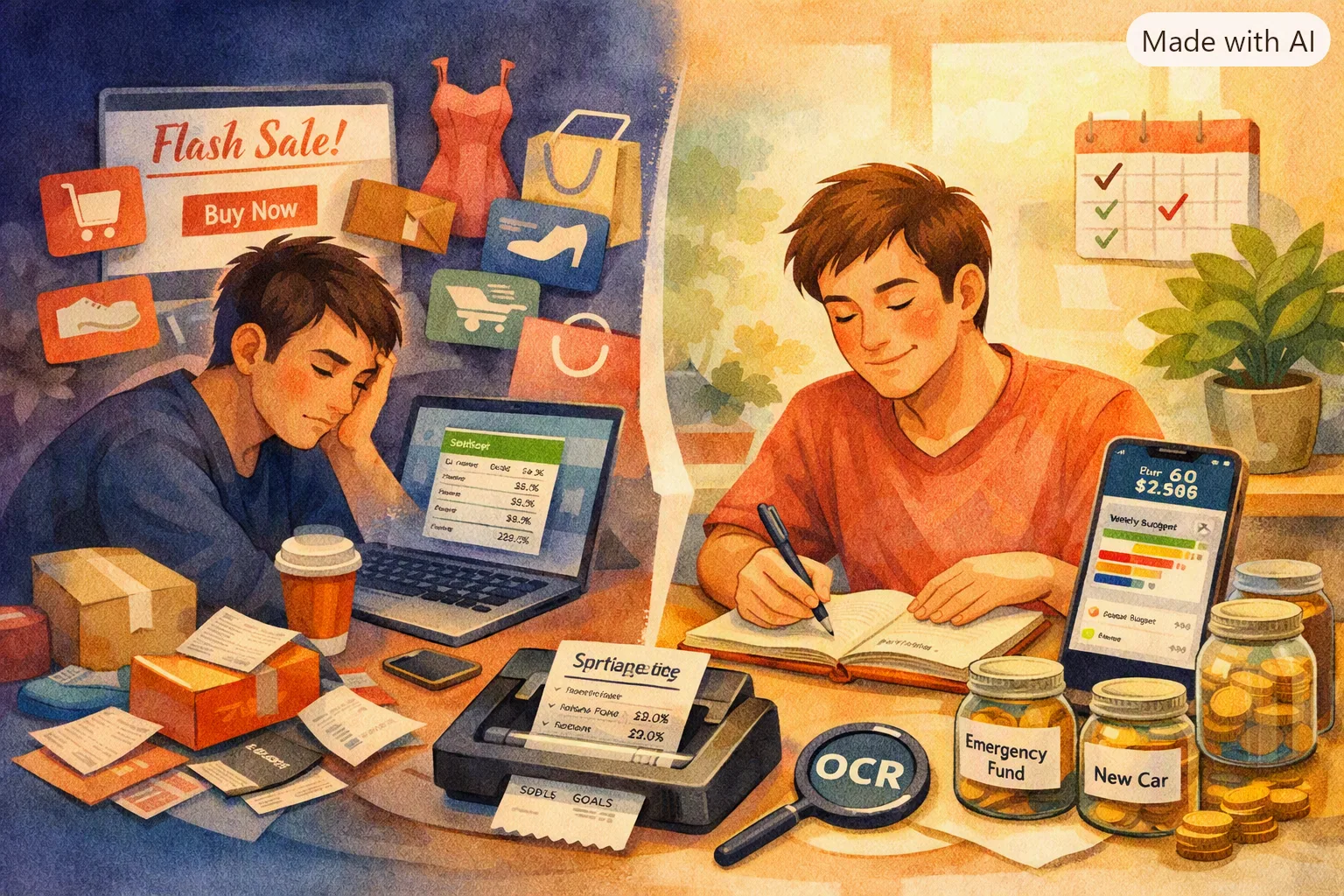
What Is Doom Spending? A Practical Way to Pause and Review
“Doom spending” is an informal term for buying things in response to worry, uncertainty, or distress. It is not a clinical diagnosis, and the label alone does not explain why a person spends. If purchases are causing financial strain, focus on the trigger, the amount, and a practical change you can maintain.
Notice the pattern without judging yourself
For a short period, record unplanned purchases and what was happening beforehand. Note the date, amount, item, and whether the purchase was planned. You may notice a link with stress, social pressure, boredom, or a particular kind of promotion; a few records do not prove a cause.
Compare your notes with statements and receipts so the review includes online, cash, and recurring purchases where you can find them. Keep returns and refunds in the same view.
Put a pause between the urge and the payment
Try a small change that reduces immediate access to optional purchases:
- Remove saved payment details from shopping accounts you use impulsively.
- Leave an item on a list and revisit it when you are calmer.
- Turn off promotional alerts or unsubscribe from messages that prompt unplanned browsing.
- Set a discretionary amount that fits your current bills and savings priorities.
- Ask someone you trust to review a large optional purchase with you.
These steps are options, not proven guarantees. Choose what feels practical, and keep a record of whether it helps.
Review the effect on your budget
Add the purchases you want to examine and compare the total with the money available after essential bills. If the spending creates overdue bills, debt, or conflict, consider asking a qualified financial counselor for help. If emotional distress feels persistent or severe, a mental-health professional can help assess it.
Yomio can store receipt-based or manually entered expense records. It does not connect to bank accounts, capture every purchase automatically, or identify emotional spending patterns. Use source statements and your own notes to decide which records to enter.
Treat a spending log as a way to see what happened, not as a judgment about your character. Then choose one change you can test and review again later.
Warning
“Doom spending” is an informal description, not a clinical category. A purchase alone cannot show whether stress, enjoyment, habit, or another factor influenced the decision. Focus on the context and whether the spending is causing a problem for you.
Information
Before an optional purchase, note what you expect it to do for you. Later, check whether the purchase met that expectation and whether the cost still fits your priorities. This is a personal reflection exercise, not a way to diagnose a spending pattern.
Success
If it helps, write down what you feel and what you are considering buying. For example: “I feel tense after work, and I am thinking about ordering this.” Taking a moment to describe the situation may help you make a more deliberate choice, but it is not a guaranteed way to stop a purchase.
Self-assessment
Are You Doom Spending?
Rate each statement honestly. This takes about 90 seconds.
I often open a shopping app without intending to buy anything.
I make purchases I don't care much about after reading or watching the news.
I feel a brief sense of relief after buying something, but it disappears quickly.
I sometimes feel guilty about purchases I made under stress.
I spend more when I feel anxious or uncertain about the future.
I've bought things I couldn't really justify just to feel in control of something.
My unplanned spending has increased over the past 12 months.
I use online shopping as a way to unwind or distract myself.
See your spending patterns before they become habits
Scan receipts or enter expenses manually, then review the records you add alongside your own notes about purchase context. Yomio does not detect emotional triggers or capture every purchase automatically.
Track my spending for freeMore from Yomio
How Impulse Spending Is a System Design, Not a Personal Flaw
The dark patterns engineering your purchasing behavior.
Buy Now, Pay Later Is Quietly Destroying Your Budget
How BNPL amplifies doom spending damage.
Spending Blindness: Why Small Purchases Are Easy to Miss
Compare rough estimates with statements, receipts, and recurring charges.