How to Stop Impulse Buying Online
Use practical steps to pause before an unplanned online purchase, review checkout choices, and reduce shopping cues that do not match your budget.

Yulia Lit
Consumer Psychology & Behavioral Economics Researcher
How to Stop Impulse Buying Online
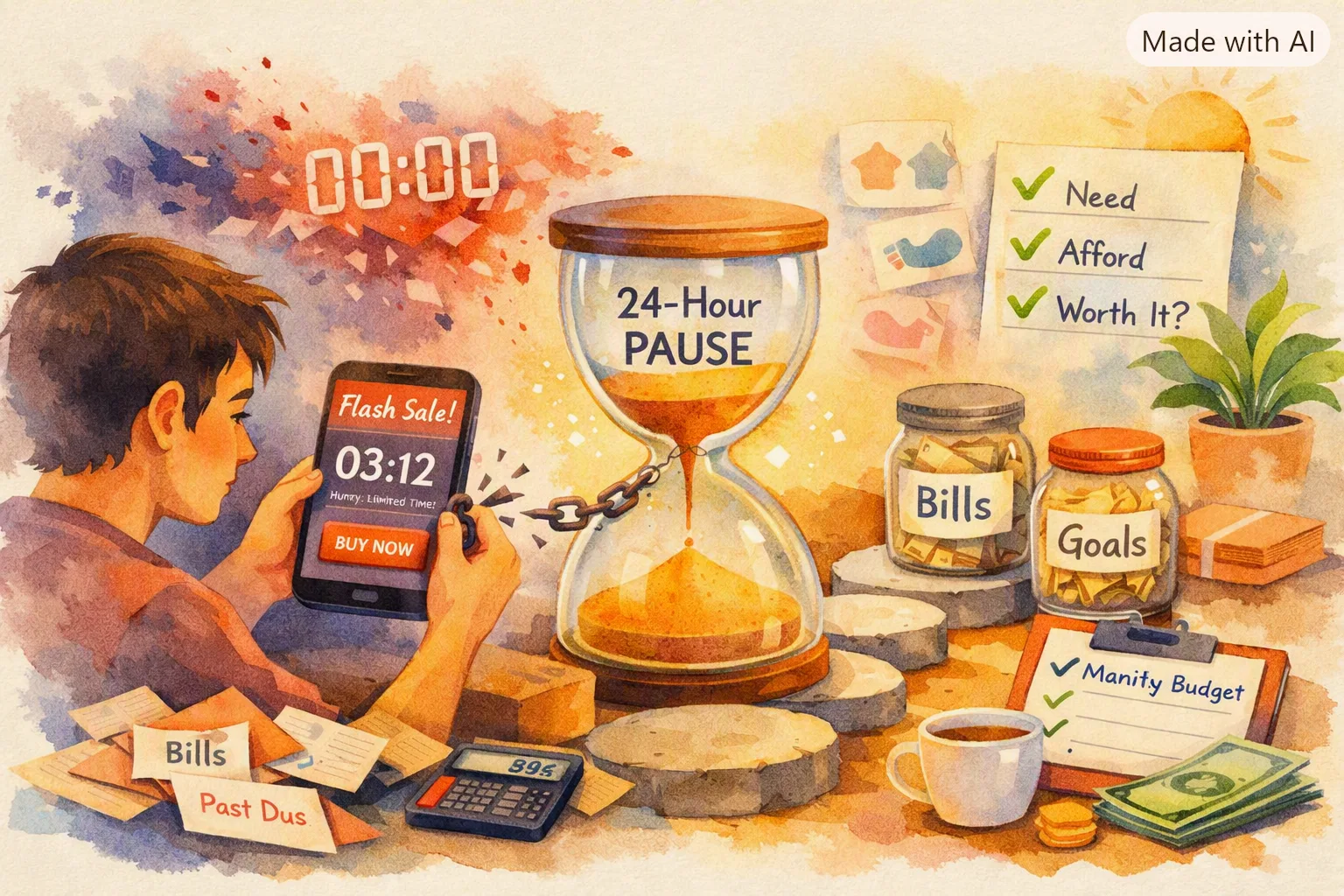
Before you buy something you did not plan to purchase, pause, check the full price, and ask whether it fits your budget and priorities. If a countdown, low-stock message, or one-click checkout makes the decision feel urgent, close the page and review the item later.
Unplanned purchases can happen for many reasons. Interface features can make buying easier or create urgency, but that does not mean every online purchase is manipulated or every shopper reacts the same way. A useful system adds a little time and visibility before you pay.
What can make online purchases feel urgent?
Online stores may use countdowns, low-stock notices, default add-ons, preselected options, or checkout flows that make it hard to compare the final cost. Some practices can pressure people or make choices less clear. The Federal Trade Commission discusses these practices in its report Bringing Dark Patterns to Light.
A 2019 Princeton-led study examined about 53,000 product pages across roughly 11,000 shopping websites and identified dark patterns on 1,254 sites in its sample. That result describes the sites studied in 2019, not how common those practices are today. See the study summary from Princeton's Bendheim Center for Finance.
For services covered by the EU Digital Services Act, online platforms must not design interfaces to deceive or manipulate users or otherwise materially impair free and informed decisions. The European Commission explains this rule in its Digital Services Act questions and answers.
Examples to notice include:
- Urgency cues: countdowns or claims that an offer will end soon.
- Scarcity cues: low-stock messages that may be difficult to verify.
- Hidden costs: delivery, service, or other fees shown late in checkout.
- Default choices: extras or recurring services selected before you make a choice.
- Friction to leave: repeated prompts that make it harder to dismiss an offer or cancel a purchase.
Check what the message says and what the final checkout total includes. You do not need to decide while a promotion is on screen.
Is it really impulse buying — or is the system pushing you?
8 questions · No right answers · Just curiosity
When you see "Only 2 left" or a countdown timer, what happens?
Your answers are private and not stored anywhere
A five-step pause before checkout
- Name the purchase. Write down what you want to buy and why.
- Check the total. Include shipping, taxes, recurring charges, and any optional extras.
- Compare it with your plan. Decide which budget category will cover it.
- Wait if it is optional. Choose a time that suits you, such as tomorrow or after your next budget review.
- Return to the item deliberately. If you still want it and it fits your plan, complete the purchase. If not, remove it from the cart.
There is no waiting period that works for everyone. The aim is to create enough space to make a deliberate choice instead of responding to a prompt.
Information
If a purchase is urgent or necessary, use your judgment. For optional purchases, a short delay can give you time to compare prices and decide whether the item matters to you.
Examples of Interface Cues to Review
Select a pattern to see an example. Examples are illustrative; check the specific offer.
Select a card to inspect the example
Change the shopping environment
- Turn off promotional notifications you do not want.
- Unsubscribe from marketing emails that repeatedly prompt purchases.
- Remove saved payment details if one-click checkout makes it harder for you to pause.
- Use a wishlist or note instead of leaving optional products in an active cart.
- Review recurring charges with the service provider and cancel services you no longer want.
These steps do not prevent every unplanned purchase. They reduce the number of prompts you see and add a small amount of effort before checkout.
Track patterns without judging yourself
For a few weeks, note purchases that were not in your plan and what was happening when you made them. You might see patterns related to a time of day, a type of promotion, stress, boredom, or social media browsing. Treat these notes as information that can help you adjust your routine.
You can also review your recent transactions by category. If one category is often higher than expected, set a limit that fits your priorities or choose a different way to track it. Yomio scans receipts and helps organize expense details; a spreadsheet or bank tool can also work.
Information
A countdown or low-stock message can be accurate, exaggerated, or difficult to verify. Check the offer terms and final price before you decide.
Information
Check shipping, tax, selected add-ons, and recurring charges before you confirm an order. The first price shown may not be the amount you will pay.
Information
Researchers have documented interface patterns such as hidden costs, preselected extras, and pressure cues. Their examples can help you inspect a checkout, but one cue alone does not prove that a specific offer is deceptive.
Information
If fast checkout makes it hard to review a purchase, remove saved payment details or move the item to a wishlist. Choose the change that makes it easier for you to pause.
Information
The Princeton study covered a sample of shopping sites in 2019. Its findings do not measure current prevalence, prove that every observed pattern changed a purchase, or describe every online store.
Information
Before accepting a trial, subscription, or add-on, check its price, renewal date, and cancellation steps. Terms differ by provider, so read the offer shown to you.
Information
The EU Digital Services Act includes a ban on deceptive or manipulative interface design by covered online platforms. Read the European Commission's DSA guidance and check the local consumer guidance that applies to the service you use.
Information
There is no universal dollar amount or waiting period that fits every purchase. For optional items, choose a review time that lets you compare the cost with your budget.
Information
Before checking out, ask: Did I plan to buy this, do I understand the full cost, and do I still want it?
Regional details to verify
United States
- Check country availability.
- Review currency and payment support.
- Read current privacy and service terms.
European Union
- Check country-specific availability.
- Review language, currency, and payment support.
- Read current privacy and service terms.
Latin America
- Check country-specific availability.
- Review language, currency, and payment support.
- Read current privacy and service terms.
Availability and terms can differ by country and provider. Confirm details directly with each service.
Review purchases against your plan
Yomio records expenses from receipts and manual entry, so you can review the purchases you choose to track.
Explore expense trackingFrequently Asked Questions
Are all limited-time offers or low-stock messages deceptive?
No. A message may reflect a real limit or promotion. Check the details and final price, and take time to decide when the purchase is optional.
Does online shopping always lead to more impulse purchases?
No. People and situations differ. Online stores can make browsing and checkout convenient, and some interface designs can create pressure. Use your own records to understand which situations affect your choices.
Should I delete shopping apps?
That is one option if notifications or easy access make it harder to follow your plan. You can also turn off notifications, remove saved payment details, or use a waiting list for optional purchases.
How can I avoid spending more to reach free shipping?
Compare the extra item cost with the shipping charge. If you do not need the extra item, paying shipping may cost less than buying something you did not plan to purchase.
More from Yomio
Related reading
About the Author
Yulia Lit writes about consumer psychology and financial decision-making, with a focus on how interfaces and shopping environments can affect purchase choices.