Buy Now, Pay Later Is Quietly Destroying Your Budget in 2026
Discover how BNPL apps engineer impulse spending—and the 5 behavior hacks that actually let you use them without losing control of your finances.

Yulia Lit
Consumer Psychology & Behavioral Economics Researcher
Buy Now, Pay Later Is Quietly Destroying Your Budget in 2026
You add something to your cart online.
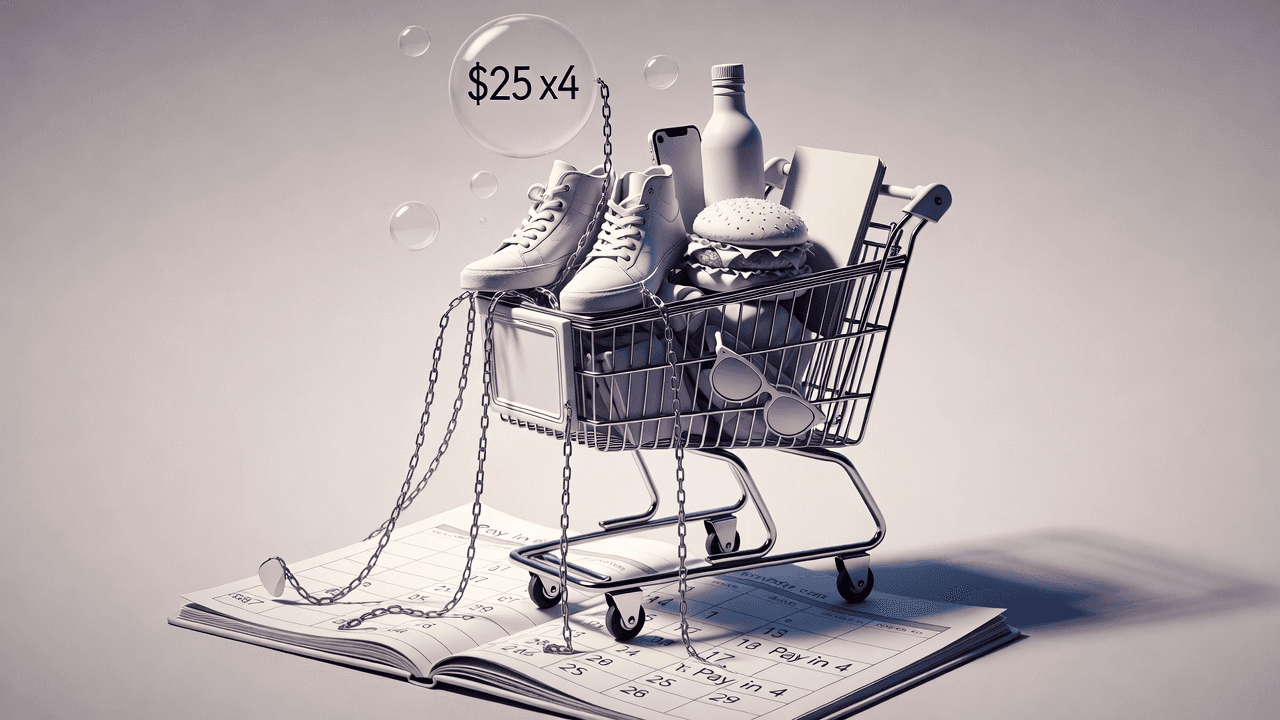
At checkout, you see it: "Pay in 4 interest-free installments of $25."
It feels harmless—like free money for now.
Next thing you know, you're stacking multiple "pay in 4" plans across apps, and your next paycheck is already spoken for.
In 2026, BNPL (Buy Now, Pay Later) is everywhere—and exploding.
U.S. users are projected to hit around 96 million by late 2026, with purchase volume surging (global GMV estimates around $500+ billion in 2026). Holiday spending alone pushed billions through BNPL in recent seasons, and it’s no longer just for big items—people finance groceries, clothes, and everyday stuff.
The problem? Studies show BNPL tricks your brain into spending 20–40% more than you would with cash or a regular card.
Basket sizes jump, impulse buys skyrocket, and late payments are climbing: 41% of users missed at least one payment in the past year (up from previous years), with Gen Z hit hardest.
This isn't about banning BNPL—it's about understanding how apps engineer the urge and using simple behavior rules to stay in control without ditching convenience.
Warning
BNPL is designed to make spending feel pain-free. The more you use it, the easier it becomes to lose track of what you actually owe.
How BNPL Apps Are Engineered to Trigger Impulse Spending
BNPL providers didn't accidentally make it addictive. They use proven psychological and design tricks—often called "dark patterns" in fintech:### The "4 Payments of $X" Illusion
Breaking a $100 item into four $25 chunks makes the cost feel tiny. Your brain focuses on the small number (a pattern called "price focalism"), ignoring the total.
Result: you spend more because it doesn't "hurt" upfront.
Instant Gratification + Deferred Pain
You get the item now, pain of paying later. This separates purchase from cost, reducing buyer's remorse and boosting impulse purchases.
This is temporal discounting at work—your brain heavily discounts future pain.
Stacking Encouragement
Apps let you open multiple plans easily, often without hard credit checks. You lose track of what you owe.
One study found heavy users juggle several loans monthly—without realizing the total commitment.
One-Click Defaults & Seamless Checkout
BNPL shows up as a top option at checkout. Merchants push it because it lifts average order value by 20–40% in some cases.
It's the path of least resistance.
Dopamine From "Approval" & Ownership
Instant approval feels like a win. Once you "own" it (even partially paid), you're less likely to return it, even if you don't really need it.
Ownership bias kicks in immediately.
Information
These aren't bugs—they're features. Combined with endless scrolling and targeted ads, they quietly inflate spending without you noticing the total cost.
The Real Cost in 2026
🔍 BNPL Trap Detector
Answer honestly to see if BNPL is quietly taking over your budget
1. I have 2 or more active BNPL plans right now
2. I sometimes forget when my BNPL payments are due
3. I use BNPL for everyday essentials (groceries, gas, bills)
4. I've bought something with BNPL that I wouldn't have bought with cash
5. I've missed at least one BNPL payment in the past year
6. I don't know my total BNPL debt across all apps
Late Fees & Stress
- 41% late in the past year
- Average late fee: ~$10 per missed payment
- Surprisingly, high-income folks are late too—it's not just a low-income problem
Debt Creep
- Average user borrows thousands across multiple loans
- Many now use BNPL for essentials (groceries, gas, utilities)
- Stacking debt across multiple providers gets out of control fast
Budget Blindness
Multiple small payments hide the total hit from your main budget view. As we covered in "Why You Spend 40% More Than You Think", this "spending blindness" gets even worse when payments are scattered across apps and charged on different dates.
Warning
You might think you're borrowing $100 total across BNPL, but if you have 4–5 active plans with $25–$50 payments each, you're actually committed to hundreds or thousands that don't show up on the main "budget."
You Don't Have to Swear Off BNPL Forever
The good news: you don't have to ditch BNPL entirely. Here are 5 battle-tested behavior hacks that let you use it occasionally without it using you.
🧠 What's Your Spending Behavior Type?
Answer these questions to discover your BNPL spending pattern and get personalized tips
1. What usually triggers your online shopping?
2. How do you prefer to pay?
3. After making an impulse purchase, you usually feel:
Hack #1: The 48-Hour Wait Rule
See "Pay in 4"? Close the tab. Wait 48 hours before buying.
Most impulse fades—studies show delayed gratification kills 70–80% of unplanned spends.
How to do it:
- Set a phone reminder: "Revisit cart in 2 days"
- If after 48 hours you still want it → buy
- If you forgot about it or changed your mind → congrats, you just saved money
This is one of the most powerful hacks because it attacks impulse at the source.
Hack #2: Treat BNPL Like a Real Loan (One-Active Rule)
Limit yourself to one active BNPL plan at a time.
No stacking. Once paid off, you can open another. This forces awareness and prevents snowballing debt.
How to track it:
- Keep a simple note: "Current BNPL: [Service] – $X due [date]"
- Check it before adding a new BNPL purchase
- This gives you a quick reality check
Hack #3: The Cash Equivalent Test
Before clicking BNPL, ask yourself: "Would I buy this right now if I had to pay full price in cash?"
If no → walk away.
This counters the "small payments" illusion by forcing total-cost thinking instead of per-payment thinking. It's simple but devastatingly effective.
Hack #4: Virtual Card + Auto-Expire for Trials & One-Offs
Use a virtual card (Privacy.com, Apple Card virtual numbers, or your bank's tools) linked to BNPL. Set spending limits or automatic expiration.
Benefits:
- Auto-blocks renewals or over-spend
- Many virtual cards expire after one use—killing accidental stacking
- Adds friction without totally blocking access
Hack #5: Post-Purchase "Regret Check" Ritual
After buying with BNPL, wait 24 hours then review:
- Do I still want/need this?
- Can I return it hassle-free?
Many BNPL platforms allow easy returns—use this window. This leverages ownership bias in reverse: break attachment early before it solidifies.
Success
Research shows that physical separation from a purchase (even for just 24 hours) significantly increases return rates. Your brain cools off and makes smarter decisions.
Quick Prevention Habits for Long-Term Wins
Once you have the big hacks in place, these smaller habits lock everything down:
- Turn off BNPL in app/store settings when not needed (many let you hide it)
- Set calendar alerts for every due date—treat them like bills, not surprises
- Review statements monthly: total BNPL exposure shouldn't exceed 5–10% of monthly income
- If late fees hit, ask for a waiver—84% success rate in recent surveys (companies often waive first offense)
- Unsubscribe from BNPL email promotions that tempt you with flash deals
The Bottom Line: BNPL Is a Tool, Not a Trap
BNPL isn't evil—it's a tool. But in 2026, with usage at record highs and late payments rising, it's easy to let it quietly wreck your budget if you're not intentional.
Apply these hacks consistently, and you keep the flexibility without the trap.
You've already beaten subscription creep in previous posts—now plug this leak too.
Pro tip: After cleaning up your BNPL, tackle your forgotten subscriptions next. Many people find $50–$150/month hiding across both categories.
Start small: Next time you see "Pay in 4," pause and run the Cash Equivalent Test. Your future budget will thank you.
Related reading

Subscription Fatigue: Finding and Cancelling Hidden Charges
Like BNPL, subscriptions create invisible recurring costs that quietly drain your budget.
Impulse Spending: A System Design, Not a Personal Flaw
How retailers engineer the urge to buy — and the behavioral systems that fight back.
Take Control of Your Spending Today
Yulia Lit is a behavioral economics researcher and digital choice architecture specialist with expertise in consumer psychology and financial decision-making. Her research focuses on how payment design patterns, installment plans, and lending interfaces influence purchasing behavior, impulse control, and long-term financial outcomes.