How to Budget When You Live Paycheck to Paycheck
Map income and bill dates to each payday, plan essential costs first, and use a small buffer only when it fits your budget.

Yulia Lit
Consumer Psychology & Behavioral Economics Researcher
How to Budget When You Live Paycheck to Paycheck
If money runs short before payday, start by mapping the dates and amounts of income and essential bills. Then assign each bill to a payday, check for timing gaps, and decide whether any change is safe and possible for your situation. This process can clarify cash flow; it cannot make income cover costs that exceed it.
Key Takeaways
- List expected take-home income, essential bills, and due dates for the next pay periods.
- Plan for food, transport, and other variable essentials after fixed bills.
- Contact a provider to ask whether a due date or payment arrangement can change; terms vary.
- Do not automate savings or payments if they could cause overdrafts or missed essentials.
- Update the plan when income or expenses change.
Warning
A monthly total can hide the day-to-day timing of deposits and bills. Use dates as well as amounts, and include only money you expect to receive.
Why Traditional Budgets Fail When Money Is Tight
Fixed percentages do not fit every income and essential-cost pattern. Start with actual income dates, bill due dates, and the amount available between them. If essential costs exceed available income, a budget can show the gap, but it cannot close it by itself.
Step 1: Build a Real Picture of Your Money
Before any budget works, you need accurate numbers — not estimates or gut feelings.
Start with at least one month of statements and bills, then use a longer period if your income or expenses vary by season. The CFPB cash-flow budget tool recommends tracking income, resources, and expenses before building a cash-flow budget. Don't rely on memory. Look for:
- Your actual take-home income (after tax, not gross salary)
- Fixed monthly bills and their exact due dates
- Variable spending: groceries, transport, eating out, subscriptions
- Irregular expenses — annual insurance, car repairs, medical visits
Comparing records with estimates can show where the two differ. Do not assume the difference is a mistake: check for cash spending, transfers, refunds, shared costs, and incomplete statements.
Recordkeeping option: Yomio can scan receipts and supports manual expense entry. It does not connect to bank accounts or import transactions, so use statements or other records to review account activity.
Related: If you're tracking spending manually and want a simpler system, see our guide to the best ways to track spending without complicated apps.
Step 2: Align Your Bills to Your Paychecks
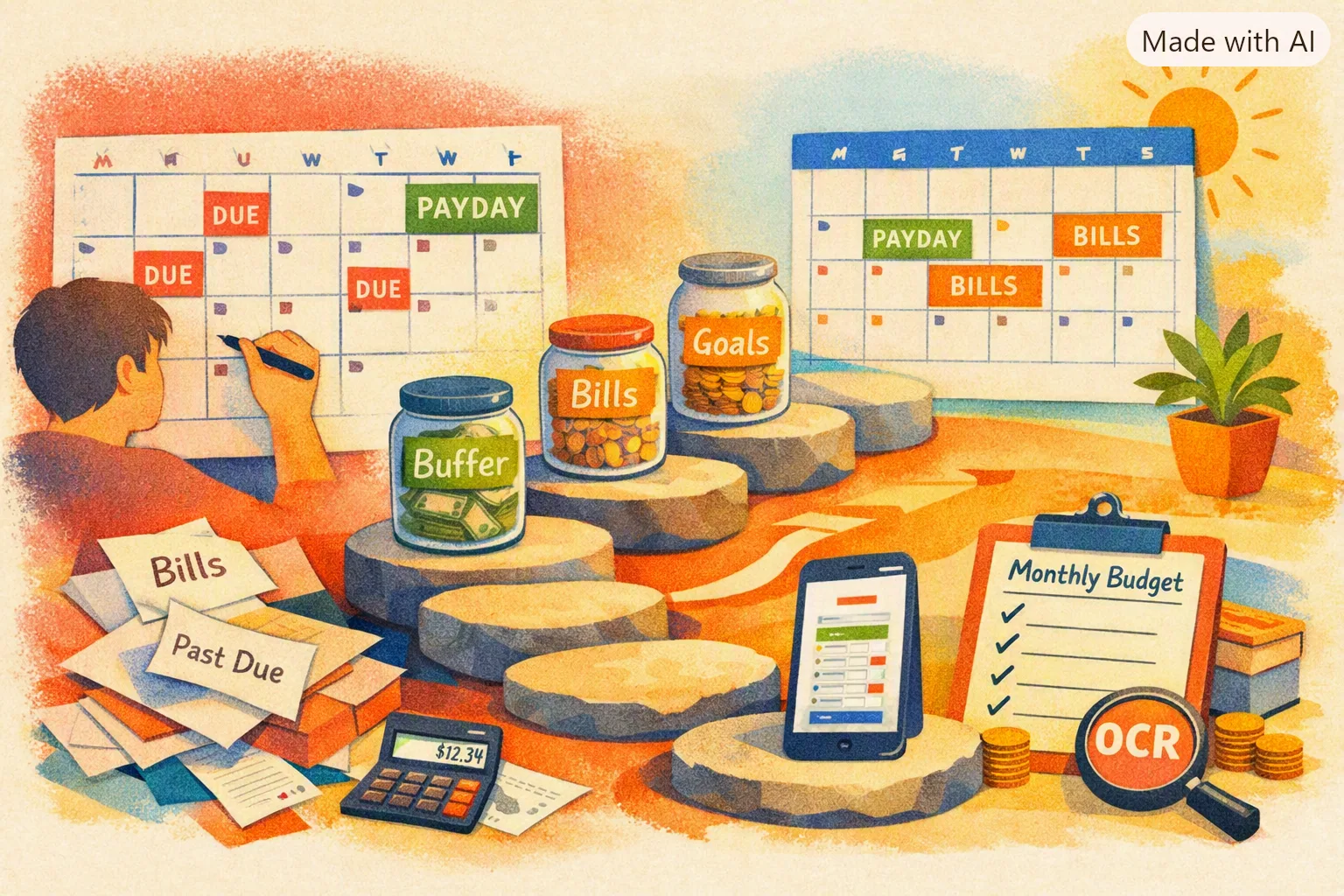
Map each bill to the paycheck or other income that arrives before its due date. This works with weekly, bi-weekly, or monthly pay, but the amounts will not always divide evenly.
Here's how to do it:
- List every bill with its due date and amount
- Put each bill beside the income date available before its due date
- Contact service providers to ask whether a billing date or payment arrangement can change; availability and terms vary
- Use automatic payments only when the deposit date and available balance make them safe
After you map the bills, check whether each payday covers its assigned obligations and identify any shortfall early.
Tip
Some providers may offer a different due date or payment arrangement. Ask about eligibility, fees, and how a change affects the next bill.
Try It Now: Paycheck Budget Planner
💸 Paycheck Budget Planner
Enter your take-home pay for each paycheck and assign your bills — see exactly what's left after each one.
Remaining: 0
Remaining: 0
➕ Add a Bill
Step 3: Choose a Budget Method That Matches Your Reality
There is no universally correct percentage split. Choose a method that makes the next bills and essential costs visible, and change it when your pay or expenses change.
Zero-Based Budgeting
Zero-based budgeting assigns available income to planned costs, savings, or other priorities. It can help you see whether each bill is covered, but do not assign money that is not available. The YNAB blog explains this method; treat it as one option, not a required target.
The Pay-Yourself-First Method
Saving regularly can be useful when essentials and scheduled bills are covered. Do not automate a transfer if it could cause an overdraft or leave a bill unpaid. The UK's Money and Pensions Service explains ways to build a savings habit.
The 50/30/20 Rule (Adjusted for Reality)
The 50/30/20 split is a budgeting example, not a rule that fits every household. When money is tight, list essential costs and due dates first, then decide what is left for flexible spending or savings. The CFPB's cash-flow budget tool focuses on timing income and expenses from week to week.
Not sure which method is right for you?
🤔 Which Budget Method Fits Your Life?
Answer 3 quick questions to find the right budgeting approach for your situation.
Q1: How do you feel about tracking every expense?
Related: If you've explored YNAB and it felt too complex or expensive, our YNAB alternatives guide covers solid free and lower-cost options.
Step 4: Build a Small Emergency Buffer First
An emergency fund is money set aside for unplanned costs. There is no single starting amount that fits every household, so choose an amount that does not put rent, food, utilities, transport, or other essential bills at risk. The CFPB emergency-fund guide also describes cash-flow steps such as asking whether a bill due date can be adjusted.
Success
Start with an amount that is manageable for your situation, and increase it only when your essential costs are covered.
Step 5: Find Room Without Drastic Cuts
Review your own records for charges you no longer use or costs you can safely change. There is no fixed percentage of spending that every household can cut.
Review these areas in your own records:
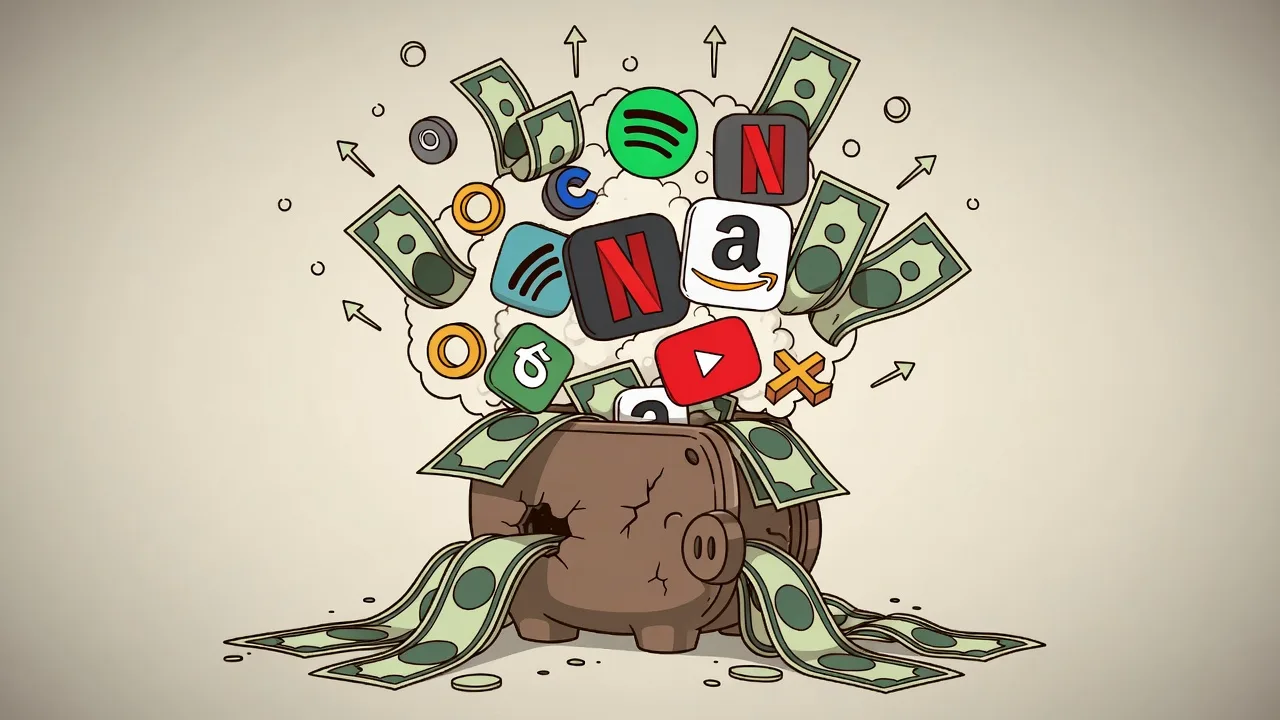
Recurring charges. Review statements for subscriptions or fees you no longer use, and check any cancellation terms before making a change. A subscription audit can help you review them.
Grocery and food spending. Food is an essential cost, and options vary by household. Compare your own spending and needs before changing this category.
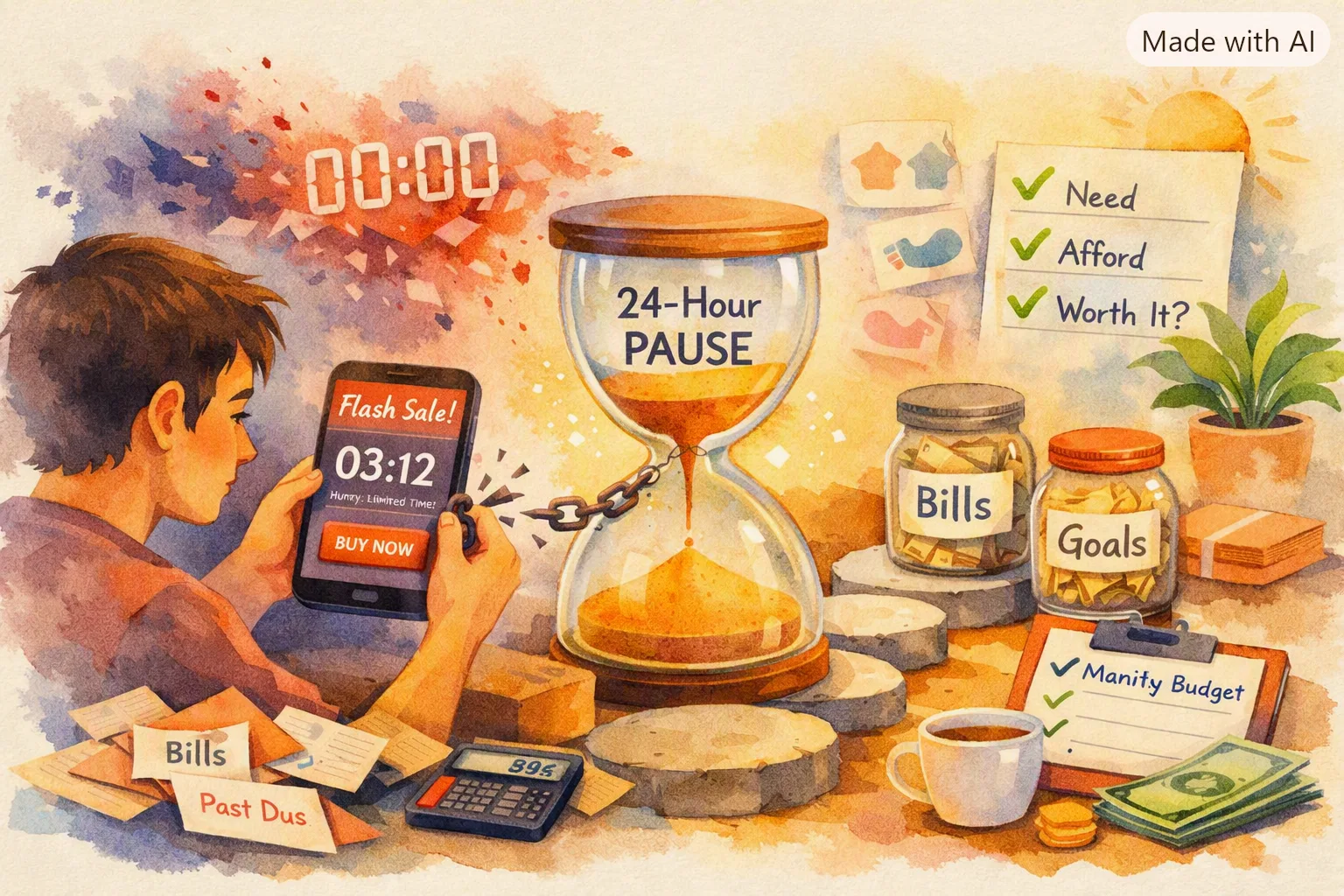
Impulse purchases. If a purchase is not urgent, pause before checkout and compare it with your current plan. Shopping apps can use design features that encourage impulse buying; understanding them can help you make a deliberate choice.
Related: If you're also dealing with Buy Now, Pay Later debt stacking up, read our in-depth look at how BNPL services can destroy your budget.
Step 6: Review the Plan on a Schedule That Fits Your Pay and Bills
Review the plan as often as your pay and bills require. For some people, that means checking it after each payday; others may use a different routine. Ask:
- What changed since my last review?
- Which bills or essential costs are due before the next income?
- Is there a timing gap that needs attention?
Review the plan when you need updated information. Adjust it when income, bills, or essential expenses change.
The Mindset Shift That Makes This Work
Budgeting when you're broke often feels punishing — like you're just documenting how little you have. That framing makes it hard to stick with.
Reframe it: a budget isn't a restriction. It's a plan for where your money goes instead of a mystery of where it went. The goal isn't to spend less on everything — it's to spend intentionally on what matters and cut waste on what doesn't.
That's a fundamentally different relationship with money, and it's achievable before your income grows.
Quick-Start Checklist
- Gather statements and bills for a useful period, such as one month or longer if income varies
- List every recurring bill with amount and due date
- Assign bills to specific paydays
- Check whether automatic payments are safe on their scheduled dates
- Decide whether a separate emergency-fund account fits your situation
- Set a savings amount only after essential bills are covered
- Review recurring charges and check cancellation terms before making changes
- Revisit the method when income or expenses change
Tools Worth Exploring
Tracking spending manually is hard to sustain. These tools reduce the friction:
- Yomio — Receipt scanner and expense tracker for receipt-based and manually entered records; it does not sync bank transactions.
- YNAB — Zero-based budgeting app with its own budgeting method; check current trial and pricing terms on the provider's site. If it feels too complex, see our YNAB alternatives guide.
- Wallet by BudgetBakers — Check current availability and supported currencies on the provider's site.
- Spendee — Simple interface, multi-currency support, available globally.
- CFPB Your Money, Your Goals toolkit — Free cash-flow and spending tools.
Running short before payday is a cash-flow problem to assess with actual dates and amounts. Use this plan to find timing gaps and possible changes, and seek local support if essential costs exceed available income.
Start there.
See Where Your Money Actually Goes
Scan receipts, review extracted details, and keep expense records. Use account statements for transactions that are not represented by receipts.
Try Yomio Free