Zero-Based Budgeting: Give Every Dollar a Job in 2026
Zero-based budgeting means your income minus everything you assign equals zero — not broke, every dollar has a purpose. Here is how to build your first one.

Yulia Lit
Consumer Psychology & Behavioral Economics Researcher
Zero-Based Budgeting: Give Every Dollar a Job in 2026
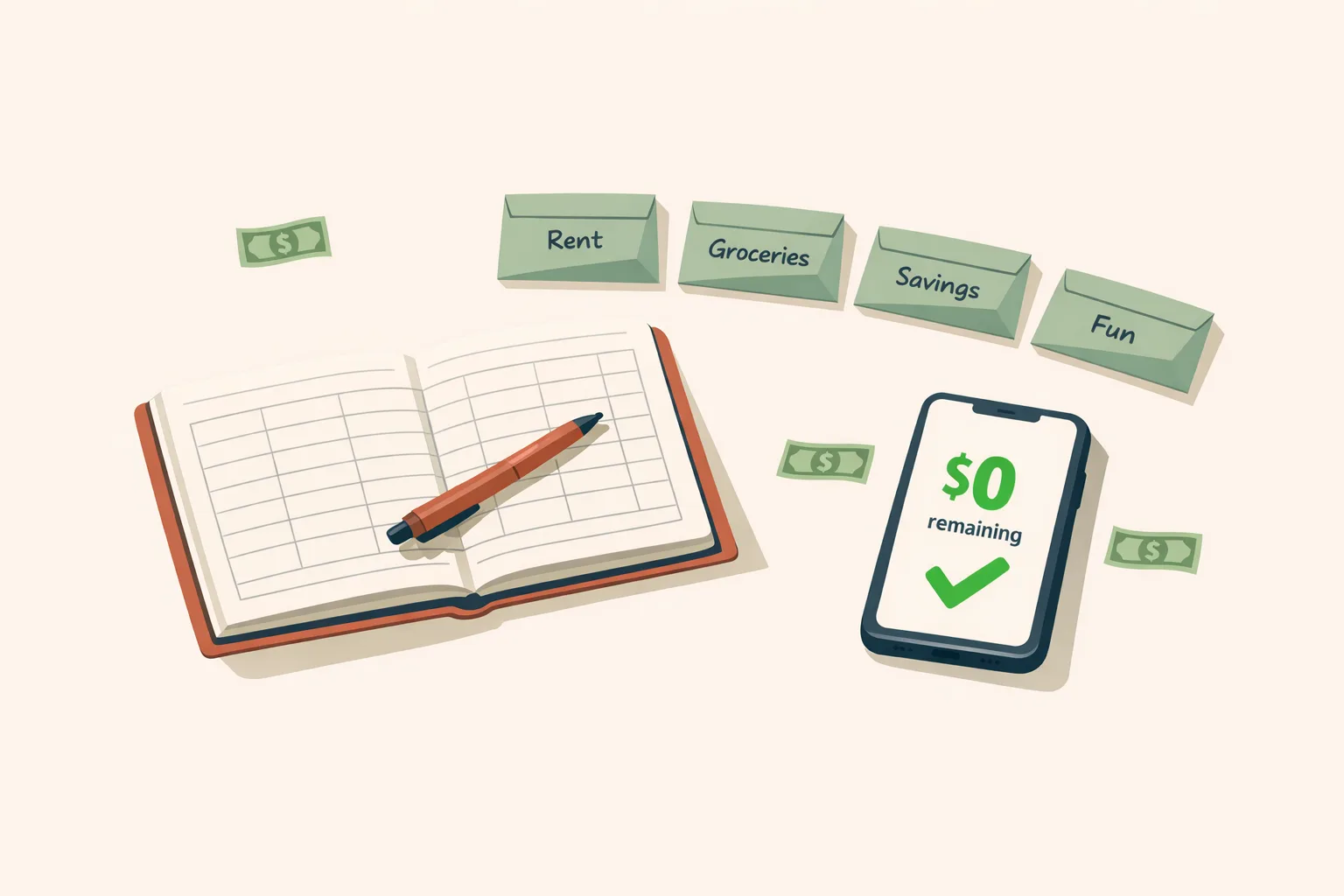
Zero-based budgeting assigns all expected income to expenses, savings, or debt before the period begins, so planned uses add up to available income. It can make trade-offs more visible, but it does not guarantee that someone will save more; the result depends on income, costs, and follow-through.
Zero-based budgeting (ZBB) uses the rule income minus all planned uses equals zero. This means all available income is assigned in the plan; it does not mean that the account balance must be zero. A plan can assign money to bills, spending, savings, and debt payments before the period begins.
Key Takeaways
- Zero-based budgeting means income minus all assigned categories = $0 — every dollar is told where to go before you spend it
- You can assign savings as a category instead of waiting to see what remains
- Initial estimates may differ from actual spending; review them and update the next plan
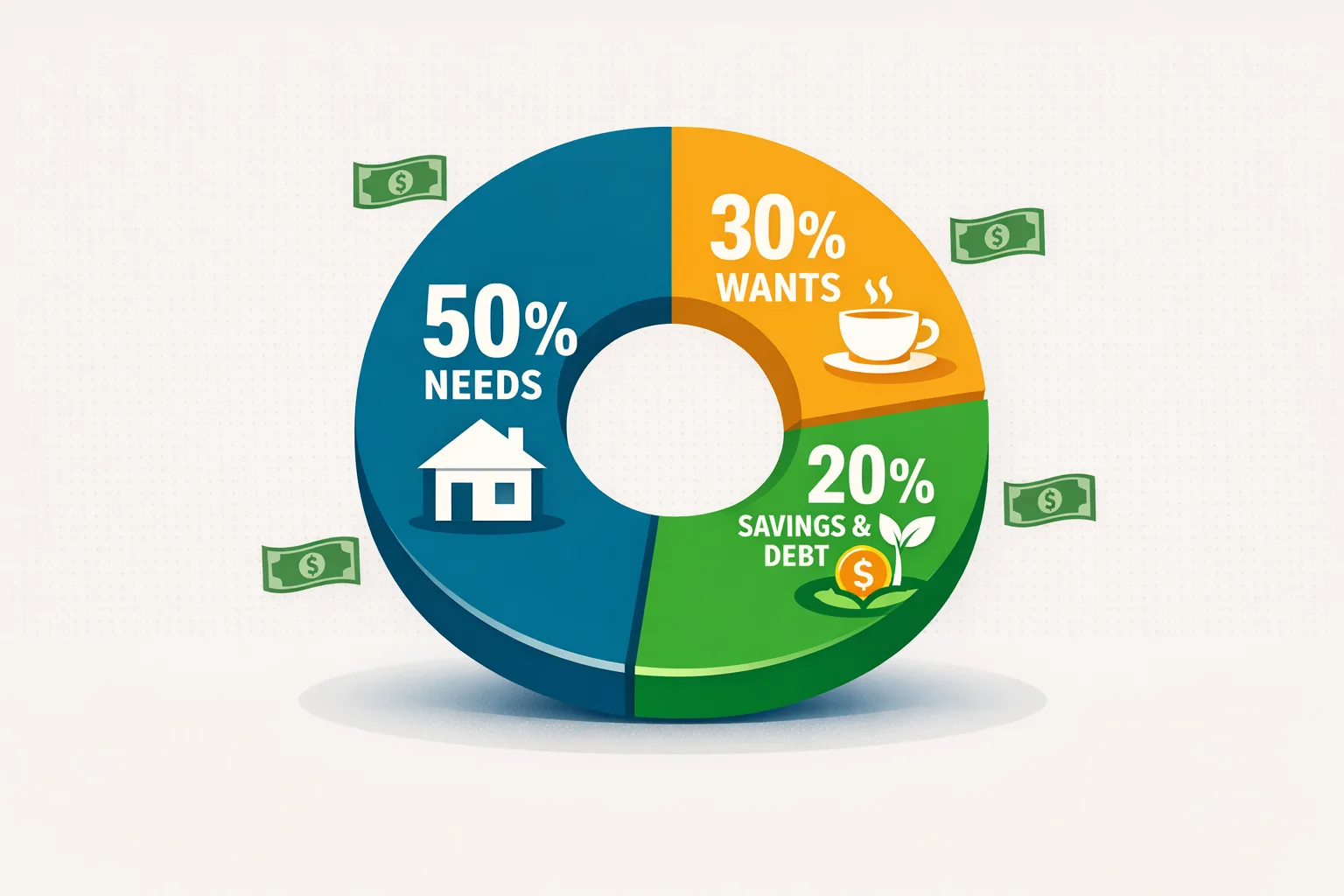
- The difference from the 50/30/20 rule: ZBB assigns amounts to individual uses, while 50/30/20 divides income among three broad groups
- It may suit people who want to assign specific amounts to bills, savings, debt, and flexible spending
What Is Zero-Based Budgeting? (One Clear Definition)
Zero-based budgeting is a personal finance method where you allocate every dollar of monthly income to a specific named category — needs, wants, savings, debt repayment — before the month begins, until the total allocated equals your income and nothing remains unassigned.
The equation:
Monthly income − (all assigned categories) = $0
This does not mean you spend everything. It means every dollar has a job. If you earn $4,500 and assign $1,800 to needs, $900 to wants, and $1,200 to savings/debt, the remaining $600 must also be assigned — to an emergency fund category, a sinking fund, a vacation fund, or an investment account. You assign a purpose for it before the month starts, not after.
Zero-based budgeting can be managed with a worksheet, spreadsheet, or budgeting tool. The envelope method is a separate way to limit category spending, often with cash or labeled digital envelopes; percentage methods such as 50/30/20 use broader shares of income instead of assigning each dollar to a line item.
Zero-Based Budgeting vs. 50/30/20: Which Is Better?
Neither method is inherently superior — they serve different users and financial situations.
| Factor | Zero-Based Budgeting | 50/30/20 Rule |
|---|---|---|
| Setup | Assign amounts to individual categories | Allocate income across three broad groups |
| Category specificity | Every dollar assigned to named category | Three broad buckets |
| Best for | Debt elimination, specific savings goals, maximum visibility | Simplicity, overview, general financial health |
| Review focus | Check whether each planned amount matches your needs and records | Check whether the broad shares fit your costs and priorities |
| Irregular income | Requires adjustment each month (recalculate from actual income) | Use minimum income as base |
| Psychological fit | Planners, detail-oriented people, goal-driven | People who want guardrails without micromanagement |
If you want to read more about the 50/30/20 approach, see our full guide to the 50/30/20 rule. Choose the method whose level of detail you can review and maintain.
Step 1: Start with Your Real Take-Home Income
Before you can assign zero dollars to categories, you need to know exactly what number you are assigning from.
For salaried employees: Look at a recent pay stub. Your after-tax take-home is the number you budget against — not your gross salary. Pre-tax deductions (401k, health insurance) have already been removed. Do not add them back.
For variable-income earners (freelancers, contractors, part-time): One approach is to plan around income you can reasonably count on, using past deposits to estimate a cautious baseline. When income exceeds it, assign the extra after it arrives to bills, savings, or other priorities.
For dual-income households: Add both take-home incomes together. Budget as a unit — zero-based budgeting works best when all income is managed in a shared system. Separate "yours" and "mine" categories can coexist within the joint zero-based structure.
Tip
If pay varies because of overtime, commissions, or bonuses, review recent deposits and note which amounts are regular. Use an estimate that fits your income pattern, then update it when actual income arrives.
Step 2: List Every Fixed Expense First
Start with recurring or committed costs, such as rent, insurance, and minimum debt payments. Their amounts and flexibility vary, so check the current bill or agreement rather than assuming every recurring cost is identical each month.
Fixed expense categories:
- Rent or mortgage
- Car payment
- Insurance premiums (auto, health, renters/homeowners, life)
- Minimum debt payments (credit cards, student loans, personal loans)
- Internet, phone plan
- Any subscription you are keeping (list each one individually)
- Childcare costs
Total the expected amounts. If they leave little for other needs, use the plan to review which costs can change and whether income, timing, or support options need attention.
Step 3: Assign Variable Necessary Expenses
Some essential costs vary from month to month. Use recent bills and records to estimate them, then update the plan when prices, use, or needs change.
Categories:
- Groceries (estimate based on your last 2 months of grocery spending — be realistic, not aspirational)
- Transportation: gas, parking, transit passes (use actual recent spending, not what you wish you spent)
- Utilities: electricity, water, gas (use last month's bill as the estimate; adjust seasonally)
- Out-of-pocket medical costs (estimate based on prescription costs and typical co-pays)
- Personal care (haircuts, toiletries — often underestimated)
If a planned amount is far below recent costs, check what would need to change before relying on it. A recent average can be a starting point, but adjust for one-time costs, seasonality, and expected changes.
Step 4: Assign Savings and Debt Repayment as Categories
You can assign savings before flexible spending if that matches your priorities: savings become a planned category, not only a month-end remainder. Zero-based budgeting itself does not prescribe which category must come first.
Assign specific dollar amounts to:
- Emergency fund (monthly contribution toward your target — see how to build an emergency fund)
- High-interest debt extra payment (above minimums)
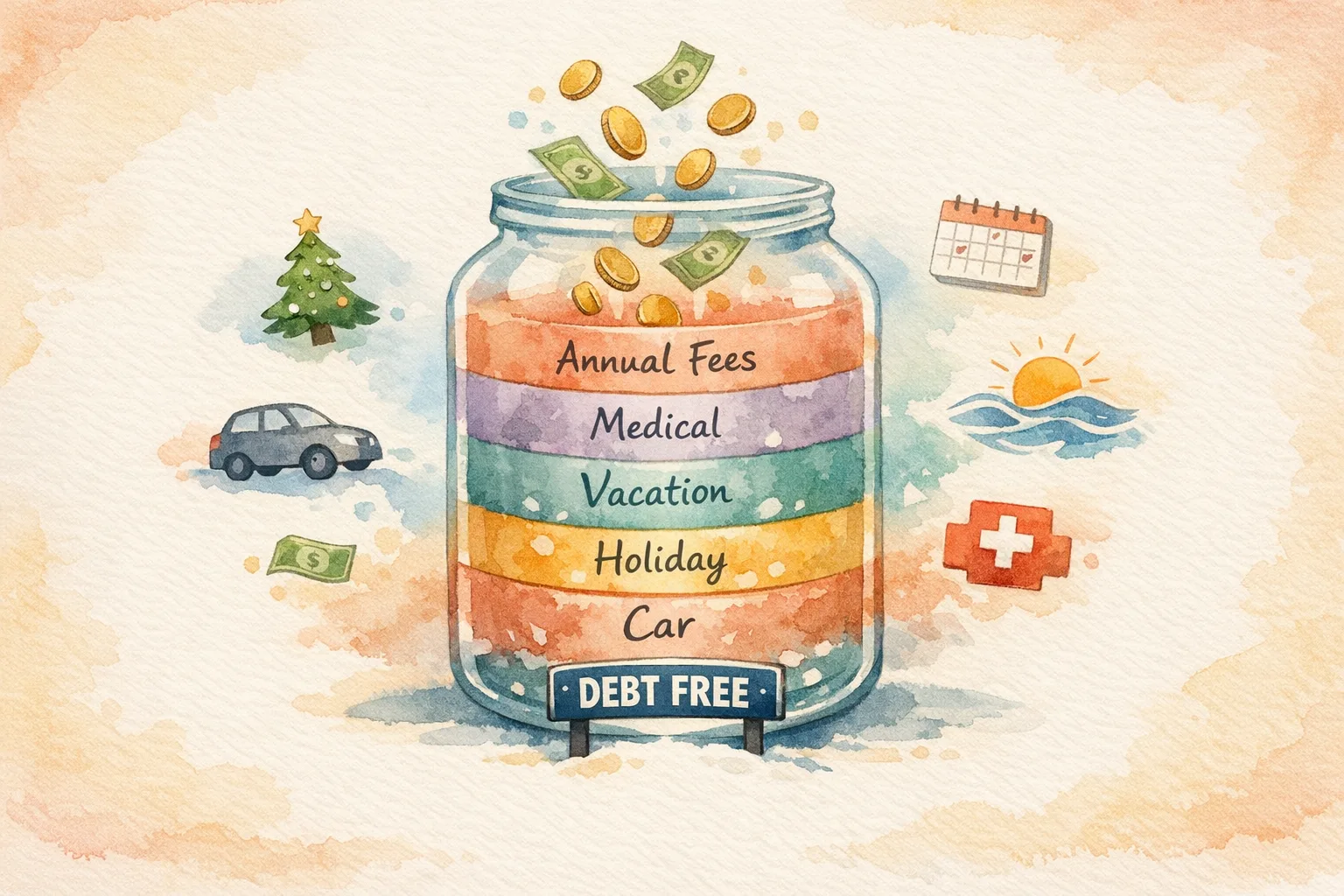
- Sinking funds for predictable future expenses (annual car insurance, holiday gifts, travel — more on this in our sinking funds guide)
- Investment account contributions (401k above employer match, Roth IRA, etc.)
- Short-term savings goals (named: "vacation fund," "new laptop," "moving costs")
By assigning a savings amount in advance, you make it part of the plan rather than waiting to see what remains. If income or essential costs change, revise the plan instead of treating the original target as a guarantee.
Success
You can make a plan easier to review by naming the purpose of each savings category, such as “Emergency fund” or “Car maintenance.” Choose amounts that fit your current income and costs, then adjust them when those change.
Step 5: Fill the Wants Categories with What Remains
After fixed expenses, variable necessities, and savings allocations are fully assigned, total everything up. Whatever is left over from your income is what you have for discretionary spending (wants).
If wants come out to $800, that is your discretionary budget. Distribute it among categories that matter to you:
- Dining out: $200
- Entertainment: $100
- Clothing: $100
- Hobbies: $150
- Personal (no-questions spending): $150
- "Fun money": $100
If the remaining amount after necessities and savings feels uncomfortably small for wants, the adjustment choice is explicit: earn more, reduce fixed expenses, or reduce savings temporarily. You cannot quietly let wants expand without seeing the impact on everything else — that visibility is the point.
Step 6: Review and Adjust During the Month
The zero-based budget you built on the first of the month will not survive contact with actual life unchanged — and that is fine. A budget reconciliation is not an admission of failure. It is a progress report.
At a point that fits your pay and bill cycle, review each category:
- Which categories are ahead of pace (on track to underspend)?
- Which are behind (overspent or on track to overspend)?
- Does any category need reallocation from surplus categories?
If actual spending differs from the plan, decide whether to move an amount between categories, change an upcoming choice, or update a future estimate. The plan can be revised when circumstances change.
Warning
Your first estimates may differ from actual spending. Compare them with your records after the month ends, then adjust the next plan to reflect your actual costs.
Interactive Worksheet
Build Your First Zero-Based Budget
Enter your income, then assign every dollar to a category. The counter reaches $0 when your budget is complete.
Common Zero-Based Budgeting Mistakes (And What to Do Instead)
Mistake 1: Leaving annual and irregular expenses out of the plan
Annual insurance bills, car registration fees, gifts, and quarterly subscriptions may not appear in a typical month. If you expect one of these costs, estimate the amount and decide whether setting money aside over several months fits your cash flow. For example, a $480 annual bill averages $40 per month over 12 months; actual due dates and affordability still matter.
Mistake 2: Setting amounts that ignore recent costs
If you plan $150 for groceries after recently spending about $450, decide what will change before relying on the lower amount. Use recent records as a starting point and choose any adjustment that fits your needs and income; there is no reduction percentage that is sustainable for everyone.
Mistake 3: Not having a "buffer" or "cushion" category
Unplanned costs can occur. Consider whether a buffer category fits your budget and choose an amount you can afford. For example, if a $30 cost is not covered by another category, a buffer could help you decide how to account for it.
Mistake 4: Abandoning the budget instead of adjusting it
If a category runs over its planned amount, review what happened and decide whether to revise the plan, change future spending, or move an amount from another category. Adjusting a plan is a choice; make sure the change still leaves enough for other priorities.
Mistake 5: Budgeting as an individual in a household with shared expenses
If household members share some costs, agree on what those categories include and how you will record them. Each person can keep separate categories for costs that are not shared.
How Spending Visibility Makes Zero-Based Budgeting Viable
The plan only reflects reality when you compare it with actual spending. You can review receipts, account records, or a tracking app and then adjust category amounts when your costs or priorities change.
Yomio records purchases from receipts or manual entry and can show receipt line items. It does not connect to bank accounts, automatically assign purchases to a zero-based budget, or send category-level budget alerts. Use it as a receipt and spending record if that supports your own budgeting process.
For more on why well-designed budgets still fail without visibility, see why budgets fail: the 5 real reasons.
Build a zero-based budget from your own plan
Record purchases from receipts and review item-level details while you manage your budget in the way that works for you.
Start for freeFrequently Asked Questions
More from Yomio